
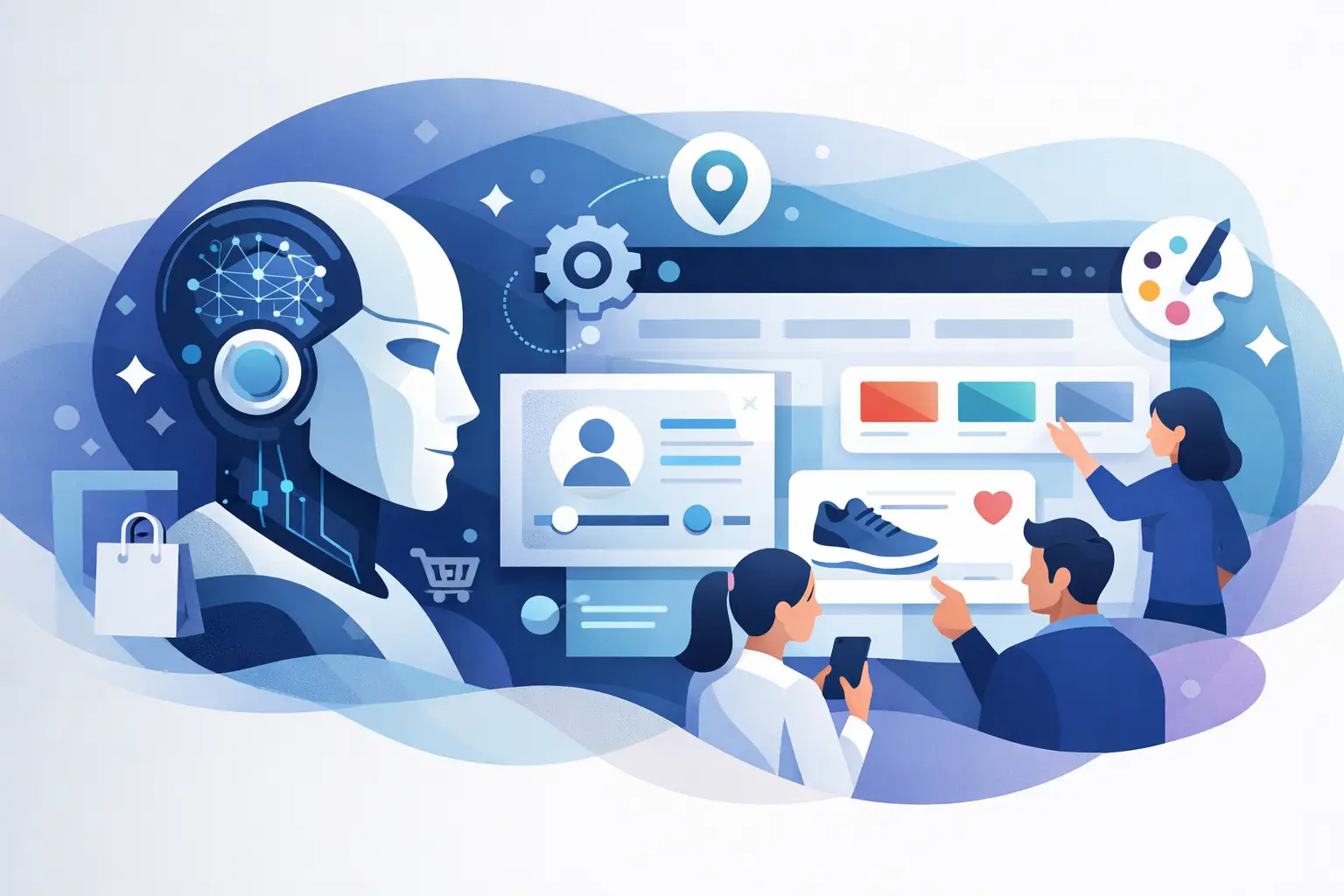
A visitor lands on your website after searching for a service, clicking an email, or responding to a referral. They should not have to sort through the same generic experience as everyone else. The most useful AI website personalization trends focus on making that first interaction more relevant without making the site harder to manage, slower to load, or less trustworthy.
For growing businesses, nonprofits, and professional service organizations, personalization is not about showing off artificial intelligence. It is about helping the right person find the right next step. That may mean presenting a donor with a relevant program, directing a real estate lead toward suitable listings, or showing a returning customer the products and support information they need.
What AI Personalization Actually Means for a Website
Website personalization uses visitor data and behavior to adjust content, recommendations, calls to action, or navigation. AI adds the ability to analyze more signals, identify useful patterns, and make decisions faster than static audience rules alone.
A basic rule-based setup might show a different banner to visitors from a specific city. An AI-assisted system can consider a wider set of inputs, such as pages viewed, referral source, device type, past interactions, declared interests, and the actions taken by similar visitors. It can then recommend content or select messaging that is more likely to be useful.
That does not mean every page needs to change for every user. In fact, excessive personalization can create inconsistent branding, confusing experiences, and unnecessary technical complexity. The best implementations focus on a few high-value moments in the customer journey.
AI Website Personalization Trends to Watch
First-party data is becoming the foundation
Organizations are relying less on third-party tracking and more on information collected directly through their websites, forms, CRM systems, email platforms, and customer accounts. This shift is partly driven by privacy expectations and changing browser policies, but it is also practical. First-party data is usually more accurate because it comes from real interactions with your organization.
For example, a nonprofit may use form submissions and prior event attendance to tailor future event invitations. A professional services firm can recognize that a returning visitor has downloaded a specific resource and present a related consultation offer rather than the same introductory message again.
The trade-off is that first-party data requires discipline. Data fields need clear definitions, consent needs to be properly managed, and systems need to be connected in a way that avoids duplicate or outdated records. AI cannot correct a poorly organized data foundation on its own.
Behavior-based content is replacing broad personas
Traditional personas are still useful for planning, but they are often too broad for real-time website decisions. Two people may both fit the same job-title-based persona while having very different reasons for visiting your site.
Behavior-based personalization responds to what someone is doing now. A visitor reviewing several service pages may need a clear project inquiry path. Someone spending time in a resource center may be earlier in the research process and benefit from a guide, case example, or newsletter sign-up. The goal is not to label every visitor. It is to remove friction based on clear signals.
This trend works especially well when a website has multiple audiences. Nonprofits commonly serve donors, volunteers, program participants, and community partners. Real estate businesses may serve buyers, sellers, renters, and agents. Each group needs a focused path, but the site should remain simple for everyone.
AI search and guided discovery are becoming more useful
Site search has often been treated as a utility. Visitors type a phrase, receive a list of pages, and hope for the best. AI-powered search can better interpret natural-language questions, recognize related terms, and rank results based on intent.
Guided discovery takes this further. A visitor can answer a small number of questions and receive relevant services, resources, products, properties, or next actions. This is often more effective than asking users to navigate a large menu structure.
The key is to keep the experience controlled. Search results and recommendations should be grounded in approved website content, product information, and business rules. A system that gives confident but inaccurate answers can damage trust quickly, particularly in healthcare-adjacent, financial, legal, or nonprofit service environments.
Personalization is moving into connected systems
The most valuable personalization rarely lives only on the website. It connects website behavior with the CRM, email platform, marketing automation tools, customer support records, and, in some cases, mobile apps or internal systems.
When those systems share relevant data, a website can do more than change a headline. It can route a qualified lead to the right team, suppress messages that no longer apply, recognize an existing customer, or trigger a timely follow-up after a meaningful action.
This is where planning matters. A disconnected stack can produce embarrassing results, such as offering a new-client promotion to an existing customer or repeatedly requesting information a visitor has already provided. Integration should support a defined workflow, not simply connect every available tool.
Predictive recommendations are becoming more practical
Recommendation engines are no longer limited to large e-commerce platforms. Smaller organizations can use AI to suggest related content, relevant products, likely next steps, or appropriate service options.
A Shopify store might recommend complementary products based on browsing and purchase patterns. A B2B company might surface related case studies based on the industry pages a visitor has viewed. A nonprofit could recommend volunteer opportunities based on a visitor’s stated interests and location.
Predictions should inform the experience, not control it completely. Provide clear navigation and allow visitors to browse outside the recommended path. A recommendation is helpful when it saves time. It becomes frustrating when it feels like a barrier.
Where to Start Without Overbuilding
A practical personalization project begins with a business question, not an AI tool. Identify one point where visitors regularly hesitate, abandon a process, or fail to find what they need. Then determine whether better relevance would solve that problem.
For many organizations, the strongest starting points are a returning-visitor message, smarter content recommendations, lead-routing improvements, or an AI-assisted site search experience. These are measurable and can be tested without redesigning an entire website.
Before development begins, define the audience signal, the experience that will change, and the business outcome. For example: when a visitor views two or more commercial real estate pages, show a consultation call to action and pass the property interest to the CRM. The outcome might be more qualified inquiries, not simply more clicks.
A small pilot also makes it easier to validate technical requirements. You can confirm whether your CMS, CRM, analytics setup, and consent tools provide the data needed to support the experience. If they do not, the right next step may be data cleanup or integration work rather than adding more AI features.
Privacy, Consent, and Trust Cannot Be an Afterthought
Personalization works only when visitors feel that the interaction is reasonable. There is a clear difference between remembering a preference someone gave you and making assumptions that feel intrusive.
Use clear consent practices, explain how information is used, and collect only the data required for the intended experience. Avoid using sensitive information for personalization unless there is a strong legal and operational reason to do so. Organizations should also establish who can access visitor data, how long it is retained, and how personalization rules are reviewed.
Transparency is good business. If a visitor understands why a recommendation appears and can control their preferences, they are more likely to view personalization as helpful rather than invasive.
Measure Outcomes, Not Activity
AI can generate a great deal of reporting, but not every metric matters. Track results tied to the actual purpose of the experience: completed inquiries, donations, purchases, appointment requests, resource downloads, support resolution, or reduced time to find information.
Compare personalized experiences with a control version when possible. A higher click-through rate may look positive, but it is not meaningful if it does not improve lead quality or conversion. Review results regularly, especially when content, audience behavior, or business priorities change.
Personalization also needs operational ownership. Someone should be responsible for reviewing messages, checking recommendations, monitoring integrations, and handling exceptions. Reliable results come from ongoing management, not a one-time feature launch.
Build for Relevance, Not Novelty
The best AI website personalization trends are not the flashiest ones. They are the ones that help visitors make a confident decision with less effort while giving your team cleaner data and more qualified opportunities.
Start with one customer journey that matters, connect the systems that support it, and test the result against a clear business goal. A well-managed personalization feature can make a website feel more attentive without making it feel overly familiar – and that is usually the balance visitors appreciate.