A donor gives through your website, a staff member updates a spreadsheet, accounting logs the gift in a separate platform, and the development team still cannot get a clean report by Friday. That is the kind of operational gap that pushes many organizations to consider custom software for nonprofit management.
For a growing nonprofit, the problem usually is not a lack of tools. It is too many tools that do not work well together. One system handles donations, another manages volunteers, another stores program data, and someone is still exporting CSV files just to answer basic questions. At a certain point, the issue stops being inconvenience and starts affecting fundraising, reporting, and staff time.
When custom software for nonprofit management makes sense
Off-the-shelf nonprofit platforms can be a good starting point. They are faster to launch, usually less expensive upfront, and often cover common needs such as donor records, email campaigns, event registration, and standard reporting. For smaller organizations with simple workflows, that can be enough.
The trouble starts when your processes no longer fit the software. Maybe your grant reporting requires program metrics the system was never built to track. Maybe your donor lifecycle spans multiple departments, but your data lives in silos. Maybe your staff has created workarounds on top of workarounds, and now every monthly report depends on one person who knows how all the pieces fit.
Custom software becomes a practical option when your organization has specific operational requirements, recurring manual work, or disconnected systems that are slowing down execution. It is not about building something because it sounds impressive. It is about removing friction that costs time, creates risk, and makes growth harder than it should be.
What custom software should solve first
The best nonprofit systems are built around real operational pressure points, not feature wish lists. A strong project usually starts by identifying where time is lost, where errors happen, and where leadership lacks visibility.
For many nonprofits, donor management is the first place to look. If donation data, campaign history, communication records, recurring gifts, and sponsorship activity are spread across multiple platforms, your team is spending too much energy stitching together a picture of each supporter. A custom platform or integration layer can centralize that information and make segmentation, stewardship, and reporting much easier.
Volunteer management is another common pain point. Scheduling, applications, onboarding documents, availability, shift communication, and attendance often live in separate tools or email threads. Custom workflows can reduce administrative overhead and give coordinators a clearer view of capacity.
Program delivery and outcome tracking also tend to expose the limits of generic software. Nonprofits often need to monitor participants, services delivered, case notes, locations, milestones, and grant-specific outcomes. Those requirements vary by mission, which is exactly why many organizations outgrow one-size-fits-all platforms.
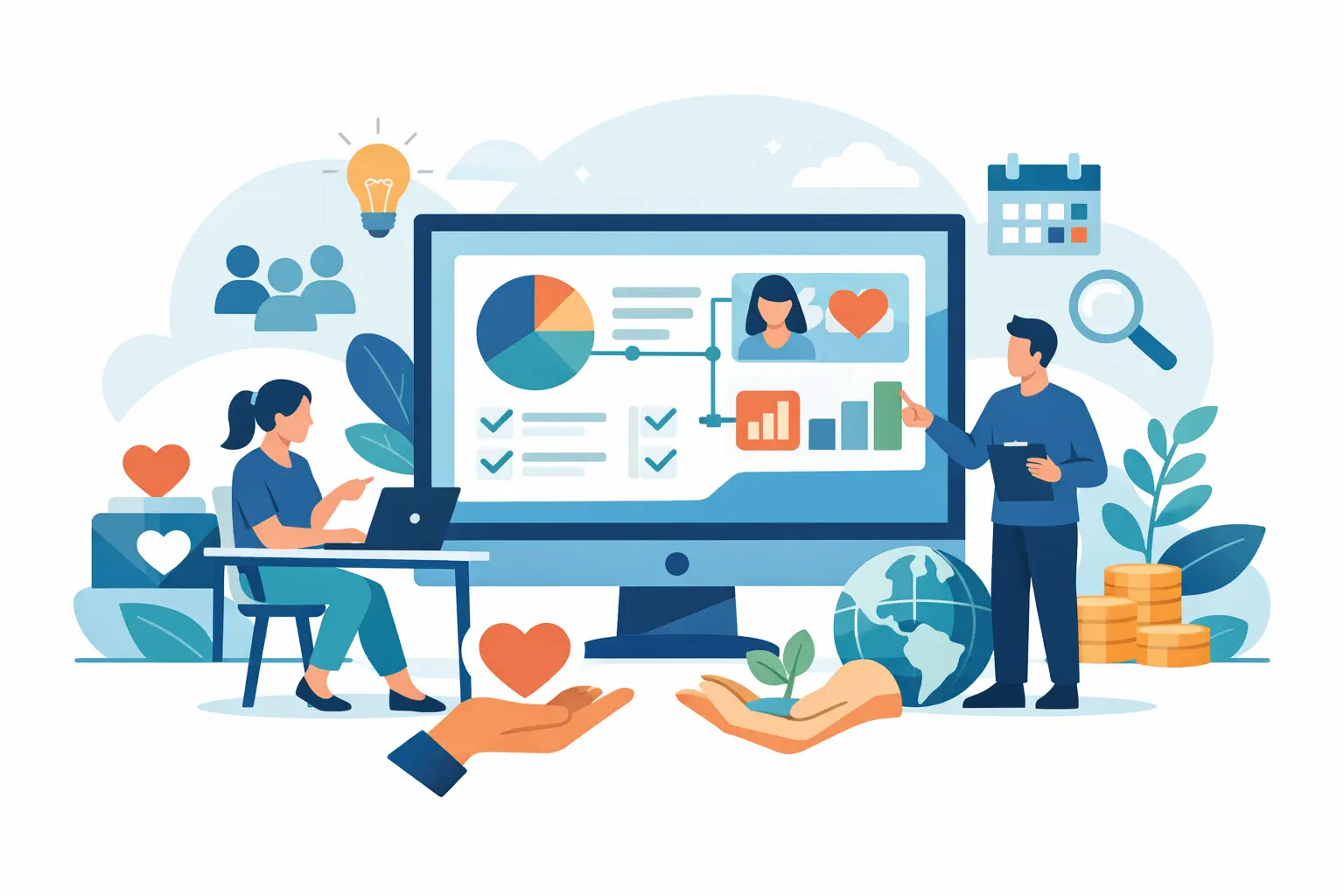
Then there is reporting. Boards want clear dashboards. Funders want consistent evidence. Department leads want current numbers without waiting a week for a manual export. Custom reporting tools can pull data from donations, accounting, CRM records, forms, and program systems into one place so staff can make decisions with confidence.
The real value is in connected systems
In many cases, the smartest move is not replacing everything. It is connecting the systems that already work and filling in the gaps with custom software.
That might mean building a donor portal that syncs with your CRM, connecting event registrations to your accounting workflow, or creating an internal dashboard that combines fundraising and program metrics. It might mean automating repetitive tasks such as acknowledgment emails, record updates, invoice generation, or staff alerts.
This approach is often more cost-effective than a full rebuild. It also reduces disruption for teams that are already trained on certain platforms. Good custom development should respect what is working, fix what is not, and create a cleaner operational flow across your organization.
What to expect from a custom build
A solid custom software project should begin with discovery, not code. Before anyone talks about features, there should be a clear review of your workflows, users, data sources, reporting needs, and approval processes. That early work matters because nonprofits often have more stakeholders than expected, from executive leadership and development teams to program managers, volunteers, and finance staff.
Once requirements are clear, the build should be shaped around practical use. User roles, permissions, form logic, integrations, dashboards, and mobile access all need to reflect how your staff actually works. Clean interface design matters here. If the system is confusing, people will go back to spreadsheets and side notes.
An experienced development partner will also think beyond launch. How will data be migrated? What happens if a grant workflow changes next year? Who handles support when a third-party integration updates its API? These are not edge concerns. They are part of building software that stays useful.
Trade-offs nonprofits should weigh carefully
Custom software is not automatically the right answer. It offers control and flexibility, but it also comes with responsibility.
The biggest trade-off is cost. Custom development usually requires a higher upfront investment than buying a subscription tool. That cost can be justified if the software replaces manual labor, reduces reporting errors, improves donor retention, or supports growth without adding administrative staff. Still, budget discipline matters, and scope needs to stay tied to measurable outcomes.
Timeline is another factor. Off-the-shelf tools can often be implemented quickly. Custom projects take longer because they involve planning, design, testing, and refinement. If your organization needs an immediate fix, a phased approach may be better than trying to solve everything at once.
There is also the issue of internal readiness. If your team has not documented its workflows, agreed on ownership, or cleaned up core data, software alone will not fix the problem. Technology can improve operations, but it works best when leadership is clear about process and accountability.
How to scope nonprofit software the right way
The safest custom projects are focused projects. Instead of asking for a platform that handles every department, start with the workflows causing the most strain.
That could be donor reporting, volunteer scheduling, intake management, grant tracking, or a dashboard that finally gives leadership one version of the truth. Once the first release is live and staff is using it, additional phases become easier to prioritize.
This is where a practical development process matters. The right team will push for clarity, define what success looks like, and keep the project aligned with timeline and budget. They should also be honest about what should be custom-built, what should be integrated, and what should stay in an existing platform.
For many organizations, that balance is the difference between a software investment that pays off and one that turns into an expensive side project.
Choosing a partner for custom software for nonprofit management
Nonprofits do not just need developers. They need a team that can translate operational complexity into a system people will actually use.
That means asking smart questions early, documenting requirements clearly, and managing the project with discipline. It also means understanding that nonprofit environments are rarely simple. Restricted budgets, mixed user groups, board reporting, donor expectations, and lean internal teams all shape the solution.
A dependable partner should be able to explain trade-offs in plain language, build around your actual workflows, and provide support after launch. Fancy language is not a substitute for strong planning, clean execution, and responsiveness when issues come up.
This is one reason organizations often work with agencies like codepxl. The value is not just in writing code. It is in building connected systems that support day-to-day operations while staying realistic about scope, budget, and long-term maintenance.
What successful nonprofit software looks like
Successful software usually feels less dramatic than people expect. Staff spends less time entering the same data twice. Reports are easier to produce. Donor information is easier to trust. Program teams can track outcomes without building their own side systems. Leadership gets answers faster.
That is the real goal. Not a complicated platform with every possible feature, but a dependable system that helps your organization operate with less friction.
If your nonprofit is hitting the limits of spreadsheets, disconnected tools, or software that almost fits, custom software may be the next practical step. Start with the problem, not the platform, and you will make better technology decisions from the beginning.