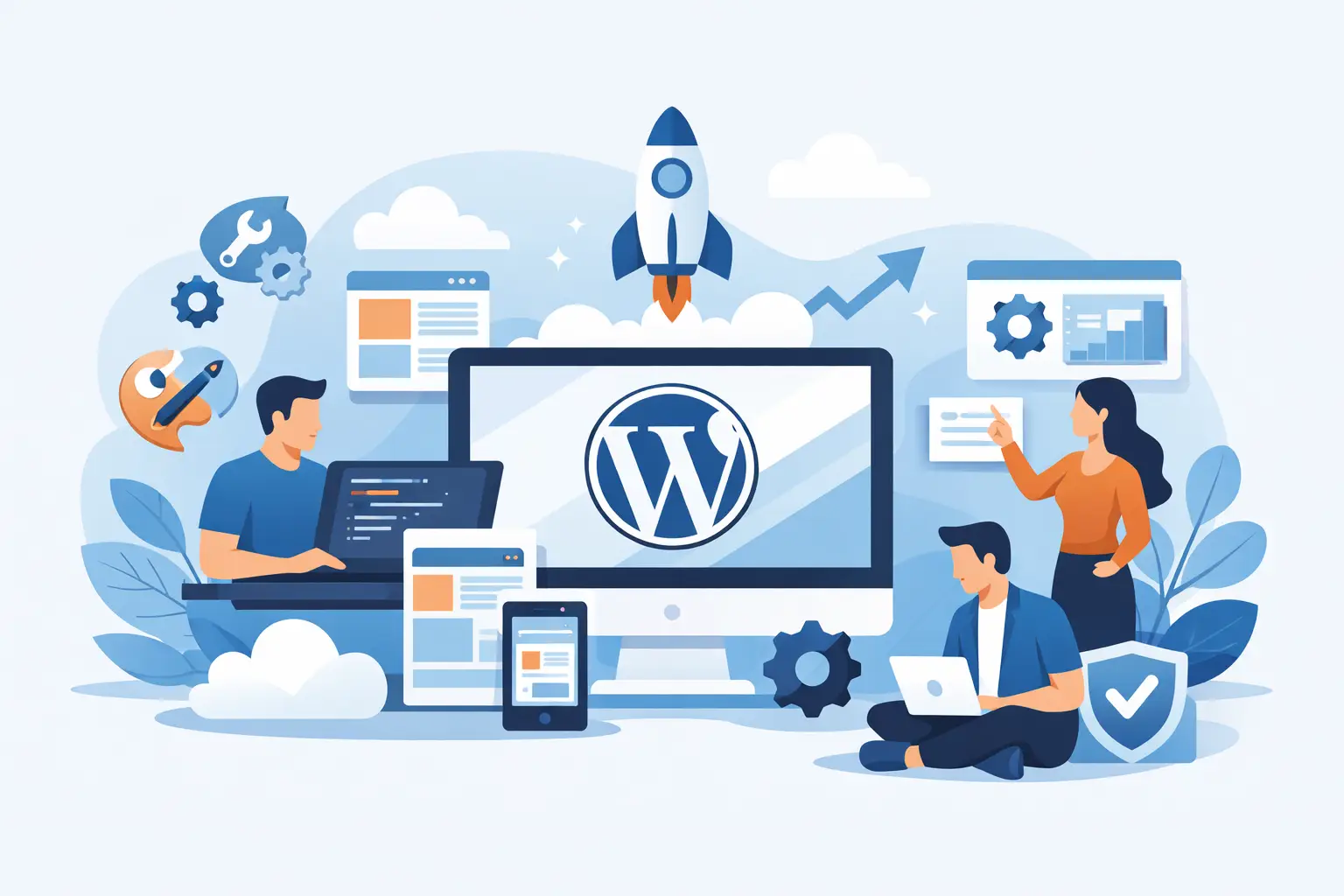
A WordPress site usually starts with a simple goal – publish content, generate leads, sell products, or support your organization. The trouble starts when that simple goal turns into a long list of technical needs. Design has to reflect your brand. Pages have to load quickly. Forms need to connect to your CRM. Editors need a backend they can actually use. That is where wordpress development services stop being a commodity and start becoming a real business decision.
For small and mid-sized organizations, the wrong build creates friction everywhere. Marketing cannot update pages without calling a developer. Sales loses leads because forms break or fail to sync. Staff waste time working around a content structure that never fit the business in the first place. On paper, the website is live. In practice, it is underperforming.
That gap is why serious WordPress work is not just about themes and plugins. It is about building a site that fits how your organization operates now, while leaving room for growth later.
What wordpress development services should actually include
A solid WordPress project starts with discovery, not design comps. Before anyone talks about layouts, the development team should understand what the site needs to do, who will manage it, what systems it needs to connect to, and what success looks like after launch. If that step gets rushed, problems usually show up later as scope creep, missed requirements, or expensive rework.
From there, good wordpress development services usually cover several layers of work at once. There is the front-end experience your visitors see, but there is also the content model, admin usability, technical performance, security, hosting setup, plugin selection, and integration planning. If your site supports donations, event management, property listings, gated resources, membership tools, or e-commerce, that complexity increases fast.
This is also where a practical agency stands apart from a freelancer installing a premium theme. A ready-made theme can work for a basic brochure site. It is less useful when your staff needs custom page blocks, filtered content, API connections, role-based permissions, or workflow-specific features. You do not always need a fully custom build, but you do need a build strategy that matches the job.
Custom vs template-based WordPress development services
This is one of the biggest decisions organizations face, and the right answer depends on budget, timeline, and business requirements.
Template-based development is faster and usually less expensive upfront. If your site needs standard marketing pages, a blog, and a contact form, a well-configured template can be enough. The key phrase is well-configured. Too many low-cost builds pile on plugins, override theme behavior, and leave the next developer guessing how everything works. That often saves money at launch and costs more over the next 12 months.
Custom development takes longer and requires better planning, but it gives you more control. That matters when your site needs a tailored admin experience, cleaner code, stronger performance, or features that do not fit neatly into off-the-shelf tools. Nonprofits, real estate firms, membership organizations, and growing businesses often reach this point quickly because their sites are tied to real operational needs.
There is also a middle ground. In many cases, the smartest approach is a custom WordPress implementation built around proven tools, not a site built from scratch for the sake of it. That keeps costs under control while avoiding the limitations of a rigid theme. Good agencies know where custom work adds value and where it is unnecessary.
Why business goals matter more than plugin counts
A common mistake in WordPress projects is evaluating the build by features alone. Clients ask what plugins are included, whether the page builder is popular, or how many revisions they get. Those details matter, but they are not the real measure of quality.
What matters is whether the website supports the business. Can your team publish new content without bottlenecks? Can you manage landing pages without breaking design consistency? Are form submissions routed correctly? Is the site structured for SEO from the start? Does it integrate with the systems your staff already uses?
A site can have fifty features and still fail if it creates more work than it removes. On the other hand, a simpler build can perform extremely well when it is planned around real workflows. That is why experienced teams ask operational questions early. They are not trying to complicate the project. They are trying to prevent expensive surprises.
Performance, security, and maintenance are part of the job
Many organizations treat launch day as the finish line. It is not. WordPress is flexible because it is an active ecosystem, and active ecosystems require maintenance.
Plugins need updates. Core files change. Hosting environments evolve. Security threats shift. A site that worked perfectly at launch can become slow, unstable, or vulnerable if nobody is monitoring it. This is especially true for organizations that rely on contact forms, user accounts, event systems, online payments, or third-party integrations.
Strong wordpress development services account for that reality upfront. That includes performance planning, image handling, caching strategy, security hardening, update policies, and support after launch. It should also include documentation or training so your internal team is not left guessing.
There is a trade-off here. The lowest project bid often excludes long-term support or builds on a stack that is hard to maintain. A slightly more disciplined implementation may cost more initially, but it reduces downtime, patchwork fixes, and emergency rebuilds later.
Integrations are often where WordPress projects succeed or fail
For many businesses, the website is not a standalone asset. It sits in the middle of a larger digital system that may include CRMs, email platforms, donation tools, scheduling software, listing feeds, inventory systems, learning platforms, or mobile applications.
This is where WordPress projects can get messy fast. A contact form that only sends email is easy. A lead form that creates contacts in a CRM, tags users by service line, notifies a sales team, and routes submissions by location is a different level of work. Both are called forms, but they are not the same project.
The same goes for e-commerce, nonprofit fundraising, and real estate websites. If a development team does not think beyond the page design, the result is often manual workarounds behind the scenes. Staff export spreadsheets, re-enter data, and manage avoidable errors because the site was never built as part of a connected process.
That is why execution matters. A dependable partner looks at the website as one component of a broader digital ecosystem. If the site needs to connect with outside systems now or later, that should shape architecture decisions from the beginning.
What to look for in a WordPress development partner
If you are hiring for WordPress work, focus less on sales language and more on process. Ask how discovery is handled. Ask who manages the timeline, how revisions are controlled, and what happens if requirements change mid-project. Ask what support looks like after launch and whether the team can handle design, development, integrations, and hosting together.
You should also pay attention to how they talk about trade-offs. Reliable teams do not promise everything immediately. They explain what is possible, what is practical, and what may be better handled in phases. That kind of clarity usually signals stronger project management and fewer surprises.
Look for a team that can translate technical decisions into business impact. If they can explain why a custom post type helps your staff, why a plugin should be avoided, or why a phased rollout protects your budget, that is useful. If every answer sounds vague or overly technical, expect friction later.
This is one reason organizations work with agencies like codepxls. They want a team that can design clean interfaces, build the right functionality, manage the project professionally, and stay involved after launch instead of disappearing once the invoice is paid.
WordPress development services are worth more when they reduce friction
The best WordPress project is not the one with the flashiest homepage. It is the one that makes your organization easier to run. It gives marketing better control, reduces manual tasks, supports lead generation, strengthens credibility, and holds up under real use.
That may mean a lean marketing site with a clean backend. It may mean a custom content structure for a nonprofit program directory. It may mean a real estate website that handles listings properly or an e-commerce setup tied to fulfillment and reporting. The specifics vary, but the standard is the same: the site should work for your users and your team.
If you are evaluating wordpress development services, do not just ask what the website will look like. Ask how it will function six months after launch, who can manage it without frustration, and whether it will support the next stage of your growth. Those answers usually tell you more than the mockups ever will.
A good website should not create extra work just because it is online. It should quietly help your business move faster, communicate better, and stay organized when things get busy.