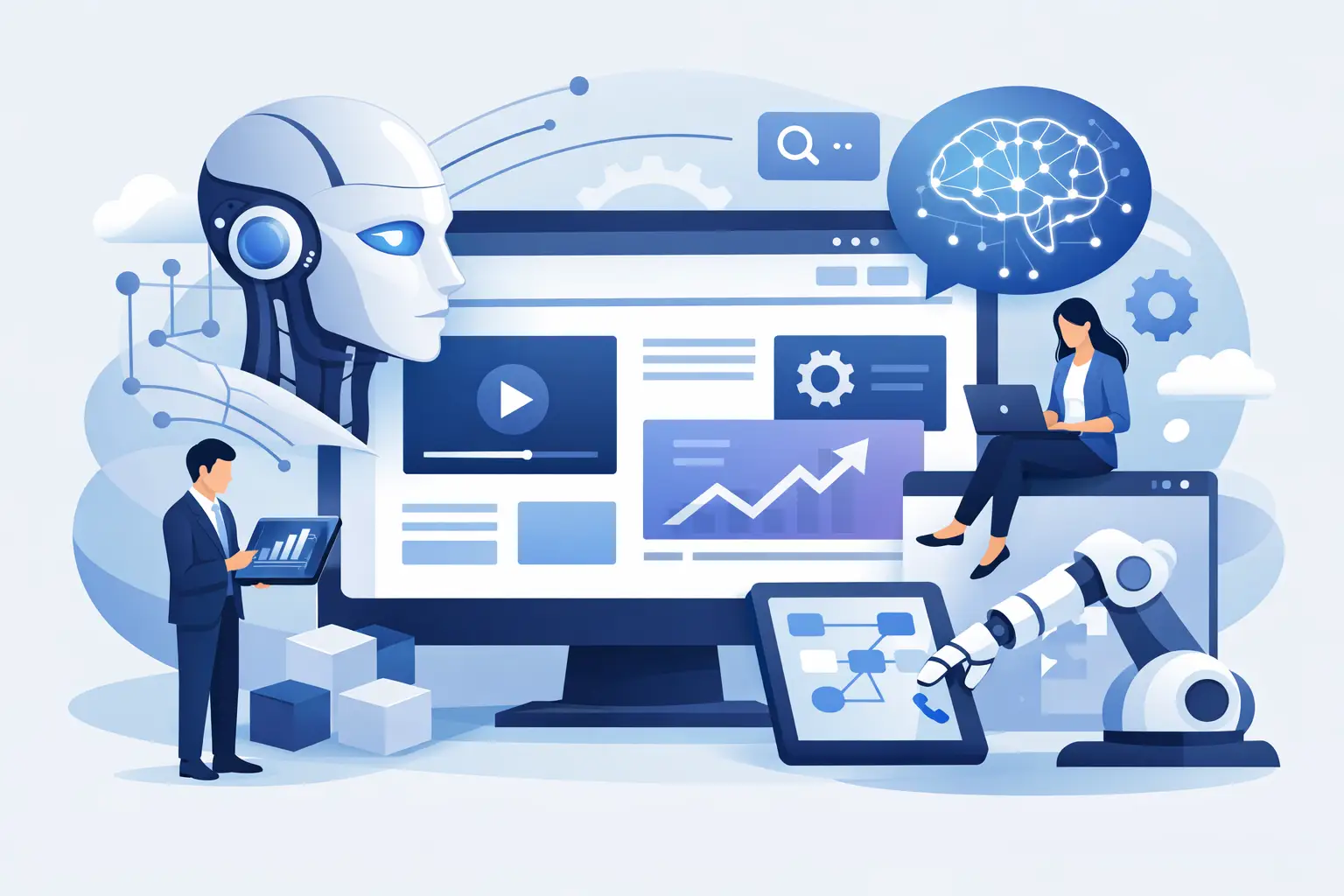
A business website should do more than look current. It should answer questions, guide visitors, support your team, and connect with the systems you already use. That is why interest in ai tools for business websites has picked up so quickly. Used well, these tools can reduce repetitive work and improve response times. Used poorly, they can create extra noise, bad content, and support headaches.
For most organizations, the right question is not, “How much AI can we add?” It is, “Where will AI actually improve the website experience or internal workflow?” That distinction matters. A law firm, nonprofit, medical practice, real estate group, or e-commerce business may all benefit from AI, but they will not benefit from the same tools in the same way.
Where AI tools for business websites make sense
The strongest use cases are practical. AI can help your website capture leads after hours, suggest content based on visitor behavior, summarize large volumes of support requests, improve on-site search, and assist your team with content production. In some cases, it can also help route information into a CRM or support platform so staff members spend less time on manual updates.
That does not mean every AI feature belongs on every site. If your traffic is low, a complicated recommendation engine may not justify the setup. If your business handles sensitive data, an AI chatbot trained on the wrong content can become a liability. Good implementation starts with business goals, not trend pressure.
The main categories to consider
AI chat and virtual assistants
This is where many businesses start, and for good reason. A well-configured chatbot can answer common questions, guide visitors to the right pages, collect lead details, and reduce the volume of basic inquiries your staff has to handle. For organizations with limited office hours, that can create immediate value.
The trade-off is quality control. A chatbot that gives vague or incorrect answers can do more damage than no chatbot at all. The best setups use approved content, clear guardrails, escalation paths to a real person, and direct integration with forms, scheduling tools, or a CRM. If the bot is guessing, it is not ready.
AI-powered site search
Many websites have weak internal search. Visitors type in a service, program, or property detail and get irrelevant results. AI-enhanced search can improve that by understanding intent, synonyms, and natural language queries. For larger content libraries, membership sites, nonprofits with program pages, or e-commerce stores, this can be one of the most useful upgrades.
The value here is simple. Better search helps people find what they need faster. That can improve conversions, reduce frustration, and keep users from leaving the site early. But if your site structure is disorganized, AI search will not fully compensate for weak information architecture.
Content assistance and optimization
AI writing and editing tools can help marketing teams produce drafts, expand service pages, create FAQs, generate metadata, and repurpose existing content. For lean teams, that can speed up production and reduce bottlenecks.
Still, speed is not the same as quality. Thin, repetitive copy can weaken SEO and make a business sound generic. Content for a professional services firm or nonprofit needs accuracy, brand alignment, and a clear point of view. AI should support your process, not replace subject matter expertise or editorial review.
Personalization and recommendations
Some platforms use AI to tailor calls to action, featured products, related resources, or landing page content based on visitor behavior. For e-commerce, education, and content-heavy sites, that can increase engagement and revenue.
For a smaller service business, personalization can still help, but only if it is grounded in meaningful data. If a website has limited traffic or weak analytics, the results may be inconsistent. This is one of those areas where the idea often sounds better than the actual return.
Analytics and lead qualification
AI can help identify high-intent visitors, flag unusual behavior, score leads, and surface patterns in conversion paths. This becomes especially useful when your website is connected to a CRM, email platform, or sales pipeline.
What matters most is actionability. If AI tells you a lead is likely to convert but your team has no follow-up process, the insight goes nowhere. The tool is only part of the system. The real improvement comes from pairing analytics with a clear workflow.
How to choose AI tools for business websites
Start with one problem. That could be missed leads after business hours, too many repetitive support questions, slow content production, or poor search performance. If you try to solve everything at once, you are more likely to add disconnected tools that create maintenance issues later.
Next, look at integration. An AI feature should fit the systems you already use, whether that includes WordPress, Shopify, a donor platform, a CRM, a scheduling tool, or a help desk. If it sits outside your workflow, your team may stop using it even if the technology itself works.
You also need to think about oversight. Who reviews the output? Who updates the source content? Who handles exceptions when the tool gets something wrong? AI can reduce labor, but it does not remove ownership. Someone still needs to manage the process.
Budget is another practical filter. Some AI tools seem affordable at first and become expensive once you add usage limits, implementation time, training, and support. A lower-cost tool with a narrower but clearer use case may be the better choice.
Common mistakes businesses make
The first mistake is putting AI on the website before the core website is working well. If your navigation is confusing, pages are outdated, forms are broken, or mobile usability is poor, AI will not fix the underlying problem. It may just hide it temporarily.
The second mistake is trusting auto-generated content too much. Businesses sometimes publish AI-written service pages, blog posts, or answers without review. The result is usually flat copy, factual mistakes, or language that does not match the brand. That is a preventable issue.
The third mistake is ignoring data governance. If your website collects personal information, donation records, client inquiries, or protected business details, AI tools need to be reviewed carefully. Privacy, permissions, and data handling should be part of the decision from the beginning.
The fourth mistake is treating AI as a one-time add-on. It works better as part of an ongoing website strategy. You monitor performance, refine prompts, update source material, and adjust the experience based on what users actually do.
A practical rollout plan
For most organizations, the smartest approach is phased. Start with one AI feature that has a clear business outcome. A chatbot for lead qualification, improved site search, or content support for your marketing team are usually safer starting points than full personalization systems.
Then define what success looks like. That might be more qualified leads, faster response times, lower support volume, improved search engagement, or shorter content production cycles. If you cannot measure the impact, it becomes difficult to justify the tool or improve it.
After launch, pay attention to real usage. Review chatbot transcripts. Look at failed search queries. Compare AI-assisted content performance with manually written pages. Ask staff whether the tool is saving time or creating extra cleanup work. Those details tell you whether to expand, revise, or remove it.
This is where an experienced development partner can make a real difference. Implementation is not just about installing a feature. It includes interface decisions, content planning, integrations, testing, training, and post-launch support. codepxls approaches this work the same way it approaches custom website and software projects – with a clear scope, practical priorities, and systems that support the people using them.
What matters most going forward
AI will keep changing business websites, but the fundamentals are staying the same. Visitors still want clear information, fast answers, and a trustworthy experience. Your team still needs tools that save time instead of creating more work. The best AI choices are usually the least flashy ones – the ones that remove friction, support staff, and fit naturally into the way your business already operates.
If you are considering AI for your website, start small, stay specific, and build around real business needs. A website does not need more features. It needs better performance where it counts.