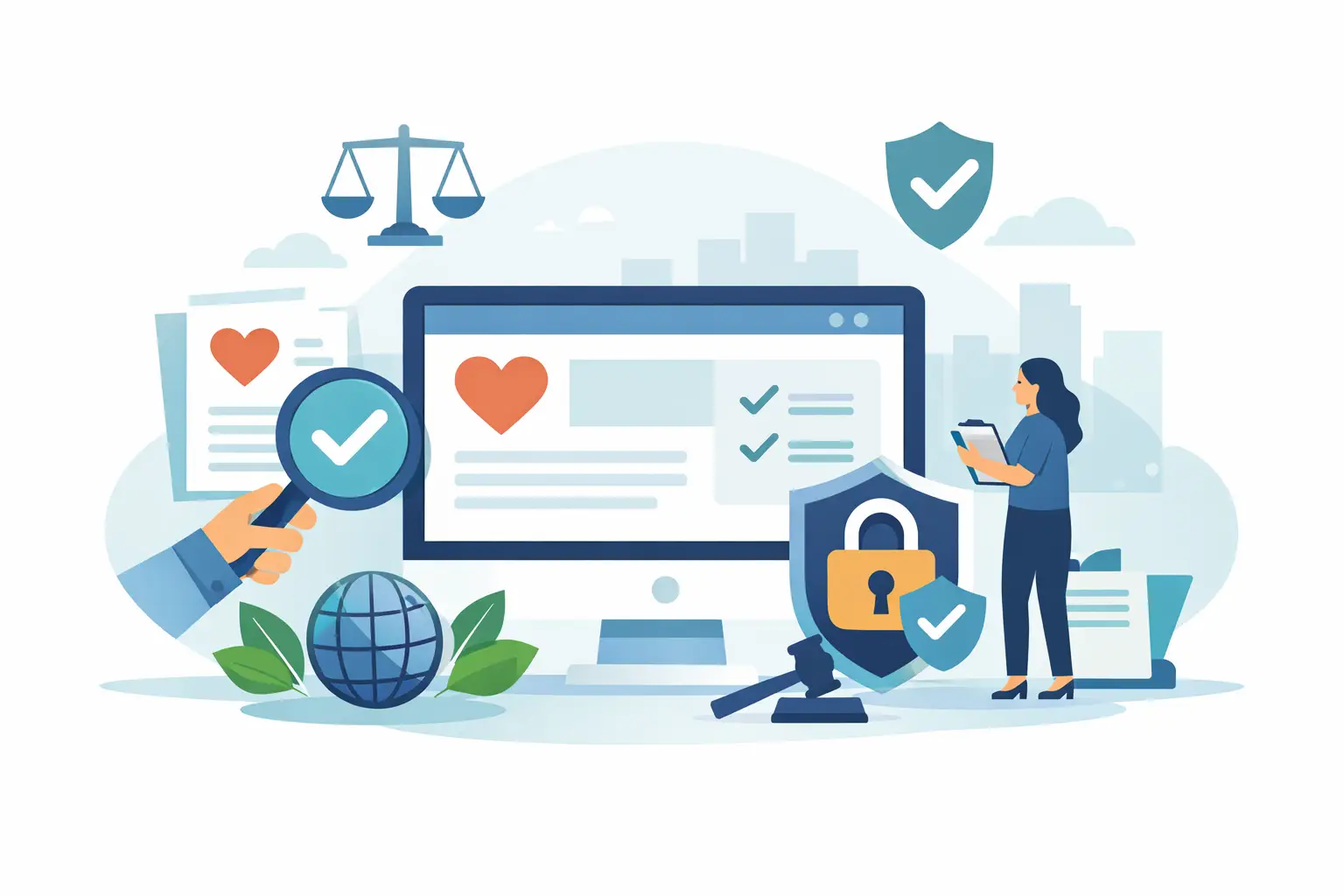
A nonprofit website can look polished, load fast, and still create risk for your organization. The problem usually is not design. It is compliance gaps hiding in donation forms, accessibility issues, privacy language, event registration flows, and outdated plugins. This nonprofit website compliance guide is built to help nonprofit leaders and marketing teams focus on the areas that matter most without turning the process into a legal research project.
For most organizations, compliance is not one box to check. It is a mix of accessibility, privacy, security, fundraising practices, and content governance. Some requirements are legal. Some are platform-specific. Some are simply the standard donors and community members expect from a credible organization. If your site collects personal data, accepts donations, publishes public-facing content, or serves people with disabilities, compliance affects you.
What nonprofit website compliance actually covers
A lot of teams hear the word compliance and think only about privacy policies. That is too narrow. A compliant nonprofit website is one that gives users fair access, protects sensitive information, communicates clearly, and handles online transactions responsibly.
The scope usually includes ADA and WCAG accessibility standards, privacy disclosures, cookie practices, secure hosting, SSL certificates, donation processing safeguards, form data handling, and content rules around claims, testimonials, and financial transparency. If your nonprofit operates across multiple states or serves users internationally, the picture gets more complicated. That does not always mean expensive custom legal work, but it does mean your site should not be treated like a brochure.
Start with accessibility, not just legal disclaimers
Accessibility is often the fastest place to uncover meaningful website risk. If visitors cannot read your content, use your navigation, complete a donation, or fill out a volunteer form with assistive technology, your site is failing real people before it creates legal exposure.
A practical nonprofit website compliance guide has to start here because accessibility touches every page template and user journey. That includes color contrast, keyboard navigation, form labels, heading structure, alt text, button clarity, video captions, and readable error messages.
ADA and WCAG are related, but not identical
The ADA is the law people usually reference. WCAG is the technical standard most teams use to measure web accessibility. In practice, many organizations aim for WCAG 2.1 AA because it is a widely accepted benchmark. That said, accessibility is not pass-fail forever. It requires ongoing maintenance as content changes.
This matters for nonprofits because sites often grow over time. Staff adds PDFs, event pages, blog posts, campaign banners, and third-party widgets. A website that was accessible at launch can drift out of compliance six months later if nobody is checking the details.
Common nonprofit accessibility trouble spots
Donation forms are a frequent problem, especially when they are embedded from outside platforms. Event calendars, volunteer applications, sliders, image-only buttons, and older PDF annual reports also cause issues. If you use a page builder, plugin bundle, or custom popup tool, test those pieces directly. A compliant homepage does not help much if your giving page breaks for keyboard users.
Privacy and data collection need plain language
Most nonprofits collect more data than they realize. A contact form alone may capture name, email, phone number, IP address, and message content. Add newsletter signups, donation records, event registrations, volunteer applications, and analytics tools, and your responsibilities increase quickly.
Your privacy policy should reflect what you actually collect, where that data goes, how long you keep it, and whether any outside services process it. Generic template language is better than nothing, but it often misses the real tools on your site. If you use email marketing software, CRM integrations, payment processors, chat tools, or embedded videos, those details belong in your disclosures.
The trade-off here is clarity versus completeness. You want language that is accurate enough to be useful and plain enough that a normal visitor can understand it. Overloaded legal text may technically exist on the page while still failing to build trust.
Donation compliance is part trust, part process
When a donor submits payment, your website becomes more than a communications tool. It becomes part of a transaction flow. That means the security and clarity of your donation experience matters as much as your fundraising message.
Use a reputable payment processor and make sure the donation page clearly states whether contributions are tax-deductible, whether donations are recurring or one-time, and how receipts will be delivered. If you allow recurring gifts, cancellation terms should be easy to find. If your campaign supports a restricted purpose, your language should match how funds will actually be used.
Watch for misleading campaign language
This is easy to overlook during a busy fundraising push. If a page suggests every dollar goes to a specific program, but your nonprofit applies funds more broadly, that wording can create problems. The same goes for impact claims that are not supported internally. Clear fundraising language protects the organization and respects the donor.
Security is compliance support, not a separate project
A surprising number of compliance issues begin as basic website maintenance failures. Expired plugins, weak admin passwords, missing updates, poor hosting, and unsecured forms can expose donor and volunteer data even if your privacy policy says the right things.
At a minimum, nonprofit sites should run on secure hosting with SSL enabled, use strong password policies, keep the CMS and plugins updated, and limit admin access to only the people who need it. Backups, malware scanning, firewall tools, and form spam protection are also standard safeguards.
It depends on the size of your organization and what systems are connected. A site that only publishes information has a different risk profile than one tied to a CRM, donation platform, event system, and internal staff portal. But in either case, website security is part of operational compliance because it supports the commitments you make about protecting user information.
Third-party tools are often the weak point
Many nonprofits rely on outside tools for donations, forms, events, newsletters, maps, and social feeds. That is normal, but it shifts your compliance review. You are not only evaluating your website. You are evaluating the vendors and scripts attached to it.
Ask simple questions. Is the tool accessible? Does it store data securely? Does it add tracking cookies? Does it have clear privacy documentation? Can it be configured to match your consent practices? If a third-party event widget fails accessibility standards or collects data without proper disclosure, that is still part of your website experience.
This is where experienced development support helps. Not because every issue needs custom code, but because someone needs to review how the parts work together in the real environment.
Content governance matters more than teams expect
Compliance is not only technical. It also lives in day-to-day publishing. Staff members may upload board documents, impact reports, photos of minors, grant announcements, or health-related content without realizing the website implications.
Set internal rules for who can publish, how images are approved, what disclaimers are needed, how PDFs should be formatted, and when legal or leadership review is required. If you have multiple departments updating the site, content governance keeps small mistakes from turning into public issues.
Build a review rhythm you can actually maintain
A quarterly website compliance check is more realistic for most nonprofits than a one-time overhaul followed by silence. Review core pages, forms, policies, plugins, accessibility basics, and user permissions on a schedule. If your organization runs major campaigns, add a quick review before launch.
This approach is usually more cost-effective than waiting for a complaint, a data issue, or a failed donation flow to expose the problem.
A practical nonprofit website compliance guide for your next review
If your team needs a starting point, focus on the high-impact areas first. Review accessibility on navigation, forms, and donation pages. Confirm your privacy policy matches your actual tools. Check SSL, software updates, and admin access. Review donation wording for clarity. Audit third-party widgets. Then create a simple ownership plan so compliance is not stuck with one person indefinitely.
For some nonprofits, that internal review is enough to surface manageable fixes. For others, especially those with older WordPress builds, custom integrations, or years of layered content, a technical audit is the smarter move. The right path depends on how complex the site is and how much sensitive data moves through it.
A compliant website is not just about avoiding trouble. It makes your organization easier to trust, easier to use, and easier to support. That is good for donors, good for the people you serve, and good for the team responsible for keeping everything running. If your site has been treated as a finished project instead of an active system, now is a good time to correct that.
Website Redesign Checklist for a Better Build - codepxls
[…] Accessibility belongs in the design process as well. Use sufficient color contrast, logical heading order, descriptive form labels, keyboard-friendly controls, and alternative text for meaningful images. Accessibility improves the experience for more users and reduces avoidable risk for the organization. […]